Micro dramas are becoming a serious business. In July 2026, Story TV, the micro drama platform owned by the Eloelo group, appointed Manan Mehta, formerly senior vice-president, marketing at Yash Raj Films, as senior vice-president, strategy and content. His brief covers premium vertical franchises and partnerships with actors, filmmakers and studios.
This guide explains what micro drama jobs involve, how each craft changes in the format, where to find the work and what productions check before they hire. For the wider map of roles, start with our guide to film industry jobs.
What Is a Micro Drama, and Why Is the Business Growing?
A micro drama, also called a vertical drama, is a scripted series shot in a 9:16 frame for phones and released in episodes of one to two minutes, each typically ending on a cliffhanger. Most platforms run a freemium model: some episodes are free and the rest are paid for through subscriptions or in-app purchases, as Inc42 reports.
The market is small and growing fast. The FICCI-EY Media and Entertainment Report 2026 valued India's micro drama market at ₹650 crore (INR 6.5 billion) in 2025 and expects growth of more than 50% a year through 2028. Discovery also works differently from OTT: a Meta-Ormax study of more than 2,000 viewers across 14 states found that 89% discover micro dramas through social feeds.
The industry's high production volume creates recurring demand across writing, directing, editing, casting and production, although hiring varies by platform and production house. Story TV releases around 150 new titles a month and Kuku TV between 200 and 250, according to Hollywood Reporter India, which puts the full cycle of micro drama production at 15 to 25 days depending on the show. Micro drama jobs also appear in our roundup of in-demand jobs in the film industry.
Which Micro Drama Jobs Are in Demand in India?
Writers are the most visible demand, followed by directors, editors, casting teams and production managers, with a new layer of strategy and content leadership above them. Micro drama writer jobs ask for people who can grab a viewer within the first three to five seconds and manage several storylines at once, as a Mumbai writer listing on Foundit spells out.
| Role | What the job involves on a micro drama |
| Writer | Breaks one story into dozens of short episodes, writes an opening hook and an unresolved closing beat for each, revises on short deadlines |
| Director | Shoots many episodes on a compressed schedule, stages scenes for a tall 9:16 frame, keeps performances at a fast pace |
| Director of photography | Composes for a vertical frame where faces and reactions fill a phone screen |
| Editor | Cuts each episode down to its hook and cliffhanger across dozens of episodes, delivers vertical masters |
| Casting director | Finds actors who play high-stakes emotion quickly and hold a close-up on a phone |
| Line producer or production head | Batches dozens of episodes into a short schedule, manages budgets across several shows at once |
| Strategy and content lead | Plans slates, builds franchises, signs partnerships with established talent |
Most micro drama jobs sit with platforms and the production houses that make shows for them. Hollywood Reporter India lists production partners in Mumbai, Hyderabad, Chennai, Delhi, Bhopal and Jaipur. The map is also spreading beyond Hindi: Story TV plans more than 1,000 original micro dramas in Telugu, Tamil, Kannada and Malayalam by March 2027, and Applause Entertainment and Story TV are co-developing premium vertical drama titles in Hindi, Tamil and Telugu.

How Writing, Directing, Editing, Casting and Production Differ on a Micro Drama
Every craft keeps its core skills on a vertical drama and changes its speed, frame and structure.
| Craft | On a film or OTT series | On a micro drama |
| Writing | Episodes of 30 minutes or more, developed over months | One- to two-minute episodes, typically built around an immediate hook and an unresolved closing beat |
| Directing | Several takes, coverage from multiple angles, a shoot spread over weeks | Compressed schedules, framed for 9:16, with some productions working with very limited takes per setup |
| Editing | Pacing built for a TV or cinema screen | Cuts with almost no pause, captions and text placed for a phone, many episode exports |
| Casting | Audition rounds and look tests over weeks | Actors who reach full emotion fast, sometimes assessed first through a vertical self-tape |
| Production | One show, scheduled scene by scene | Dozens of episodes batched by location and cast, often several shows in parallel |
Writing. A micro drama writer turns one story into a long run of short episodes. Episode and season counts vary by platform, but many series run across dozens of short episodes: Hollywood Reporter India describes one model of 30 to 35 episodes totaling 75 to 80 minutes. Episodes are typically structured around an immediate hook and a strong unresolved beat or cliffhanger that encourages viewers to continue. One writer told The Established that everything has to stay "very high voltage". Most micro drama writer jobs run to tight development windows: Hollywood Reporter India puts script development at about 10 days. Browse writing jobs on Artisty.
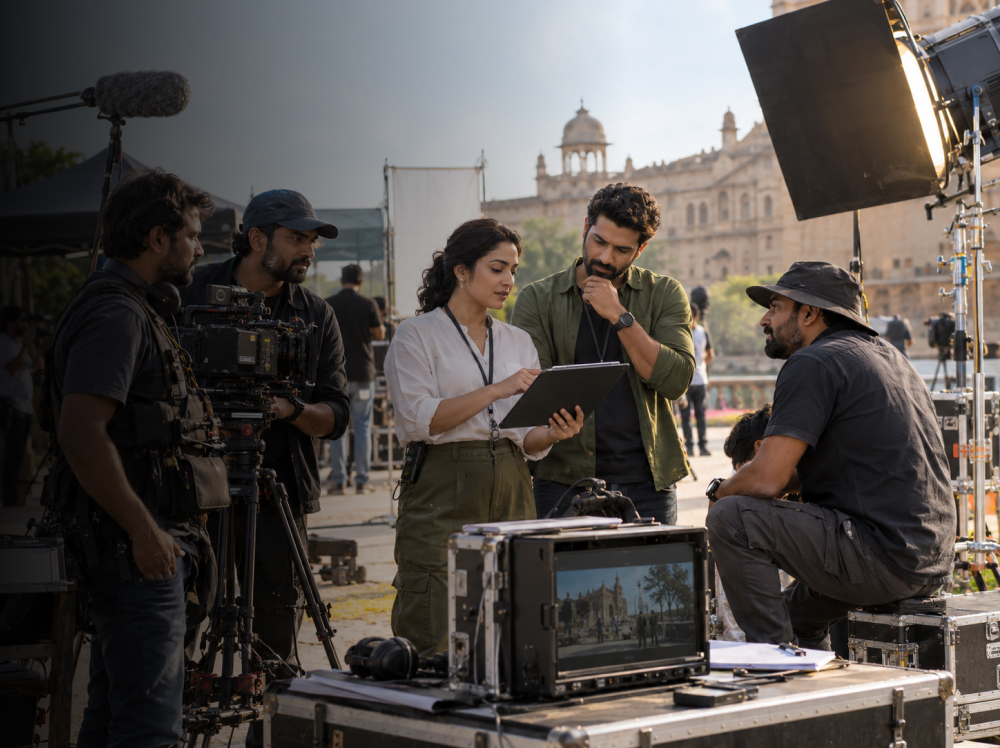
Directing. Some productions shoot a full season in a few days, with schedules varying by episode count, locations, cast and production model. Hollywood Reporter India describes one model of two to three shoot days followed by seven to 10 days of post-production, and The Established reports that actors on some shoots get no more than two takes. Working at that speed changes how a director and DOP frame a scene:
- Headroom and framing. A 9:16 frame is tall and narrow, so close-ups and mid-shots carry most scenes, with headroom kept tight enough that faces stay large on a phone.
- Blocking in depth. Two actors side by side rarely fit a vertical frame, so scenes are staged front to back, with one character closer to the lens.
- Composing for vertical first. A wide horizontal composition crops badly when reframed for a phone, so shots are planned in 9:16 from the start.
- Continuity at speed. With many episodes shot out of order in a few days, continuity of costume, props and eyelines needs tracking on every setup.
Compare the format with our guide to filmmaker jobs in India, or browse film director jobs.
Editing. On a micro drama, the edit decides whether a viewer pays for the next episode. Editors cut with almost no breathing room and land each episode on its closing beat. The job also covers captions and subtitles, on-screen text and graphics kept clear of the top and bottom of a phone screen where app controls sit, fast review rounds, exports for dozens of separate episodes, and language versions when a show is dubbed. Our guide to post-production jobs covers the wider pipeline, and Artisty lists film editing jobs.
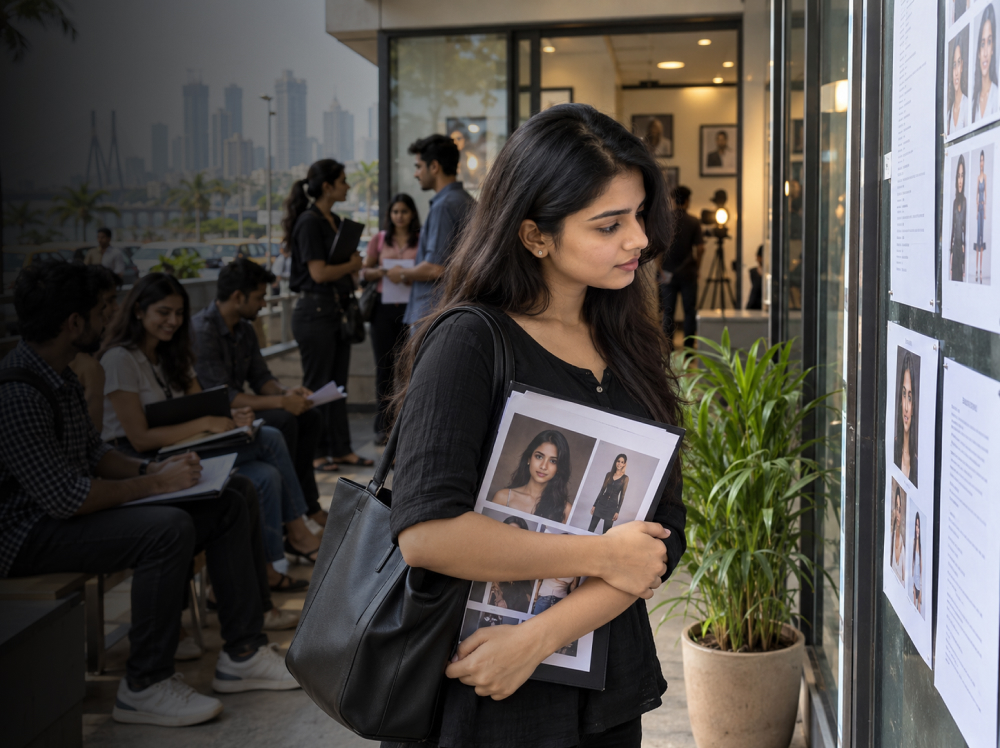
Casting. Micro drama auditions are built around pace. Directors favor actors with experience on fast-moving TV crime shows, The Established reports, because a performance has to hit full emotion in seconds and hold up in close-up. Some productions may request vertical self-tapes so casting teams can assess how an actor reads in the intended format, and Backstage recommends shooting them vertically to match. Find acting jobs on Artisty.
Production. Micro drama production is a scheduling job first. A line producer batches dozens of episodes by location and cast so a season fits into a short shoot. A listing for a head of a micro drama division asks for systems to mass-produce content while protecting creative quality, plus budgeting and greenlighting across multiple projects. The on-set roles map closely to our guide to film production jobs in India, and Artisty lists production crew jobs.
Skills That Carry Over, and the Ones You Need to Build
Most micro drama jobs reward skills from daily TV, ad films and short-form social content; the gaps are vertical framing, hook writing and speed. Daily TV crews already work on tight schedules. Ad film crews know how to land a story in under a minute. Creators who make reels already think in 9:16. Composing a vertical drama means stacking the frame top to bottom, with faces and reactions doing most of the work, and writers and editors have to build to a hook in the first seconds and a cliffhanger in the last.
Why Language Skills Matter in Micro Drama Jobs
Language ability is a market-access skill in micro dramas, not only a casting advantage. The Meta-Ormax study found that Hindi and English lead micro drama viewing, followed by Tamil, Telugu and Kannada, and Story TV's South India slate is being made in four languages. In micro drama writer jobs, a writer who can write natural dialogue in Telugu, adapt a Hindi script for Tamil viewers, or review dubbed versions for meaning can work on more slates. The same holds for actors attending micro drama auditions in more than one language, dubbing artists, editors checking subtitles, and production coordinators working with local crews in Hyderabad, Chennai, Bengaluru or Kochi.
Where AI Fits in Micro Drama Work
AI is changing tasks in micro drama production while the craft roles remain. Kunj Sanghvi of Kuku TV told Hollywood Reporter India that AI is "a copilot right from gauging potential of stories, helping fix scripts, to production planning". The same report describes where it shows up by role:
| Role | Where AI shows up in micro drama work, as reported |
| Writer | Testing a story's potential, fixing scripts, identifying hook points and cliffhangers |
| Director | Pre-visualization shared with production houses before the shoot |
| Line producer | Production planning |
| Post-production and sound | Dubbing, background music, and VFX shots such as luxury cars and helicopters |
| Content lead | Data systems that scan past trends to predict next month's slate, as Story TV describes |
Familiarity with these tools helps in each role, but it does not replace the creative judgment, performance direction or editorial decisions a finished show needs. Sanghvi's own view is that AI's dramatic language in Indian languages "is still basic". If micro dramas are your way in, our guide to jobs in the film industry for freshers covers the first steps.
Where Can You Find Micro Drama Jobs in India?
Micro drama jobs reach people through a handful of routes, and most professionals use more than one.
| Where to look | What you will find there |
| Micro drama platforms | Full-time content, strategy and in-house writing roles, posted on their careers pages and on professional networks such as LinkedIn |
| Production houses making shows for platforms | Most crew hiring in micro drama production: directors, DOPs, editors, line producers and on-set crew, engaged per project |
| Job boards | Writer and leadership listings, including micro drama writer jobs and remote writing briefs |
| Casting directors and casting calls | Micro drama auditions for lead and supporting roles, across language slates |
| Crews already working in the format | Repeat work, since one series often leads to the next with the same team |
| Artisty | Jobs, gigs, collaborations and internships, with a profile productions can discover by role, language and verified skills |
How the Work Is Usually Structured
Micro drama jobs come in a few shapes. Platform roles in content, strategy and in-house writing are often full-time: the Mumbai writer listing above was a full-time, permanent position. Shoot and post-production crew are usually engaged per project, for the length of a season's schedule. Writers may be commissioned for a full series at once, and freelance writing briefs also appear on job boards. Compensation varies by role, experience, platform, language, episode count and contract structure, and reliable public figures are scarce, so agree the fee and scope in writing before you start.
Micro Drama Hiring Checklist: What Productions Check Before They Bring You On
Productions want proof that you can work in the format at its pace. Before you apply for micro drama jobs, check yourself against this list:
- Proof of turnaround. Credits on daily TV, ad films or fast digital shoots show you deliver on short schedules.
- Language range. List every language you work in, since shows are commissioned in Hindi, Tamil, Telugu and more.
- Availability for batch shoots. A season is shot over a few consecutive days, so state your availability clearly.
- A clear brief in writing. Agree the episode count, delivery dates, revision rounds and fee before you start.
- A profile productions can find. Your role, languages, samples and credits in one place make you discoverable when a production is staffing a show.
What to show depends on the role:
| Role | What to show |
| Writer | The first three to five episodes of a spec series, with the hook and closing beat visible in each |
| Director | A vertical scene or reel, plus credits on fast-turnaround shoots |
| Actor | A vertical self-tape with close-up work; productions may request micro drama auditions in this format |
| Director of photography | A 9:16 reel showing close-up and mid-shot composition |
| Editor | Two or three vertical edits that show pacing, captions and text placement |
| Casting director | Casting credits and the languages you cast in |
| Line producer or production head | Schedules and budgets you have run across multiple episodes or shows |
Artisty puts that profile in one place. KalaAi verifies your skills through a skill check and a short KalaAi interview, adds a verified badge, and matches your profile to projects that fit. Work on Artisty comes as jobs, gigs, collaborations and internships, which suits a format built on short, repeat engagements. See how Artisty works for talent.

Conclusion: Where Micro Drama Work Goes Next
The leadership hires are the signal to watch. A platform hiring a studio marketing head to build premium franchises with established actors and filmmakers points to a premium tier of micro drama production growing alongside the volume business. Regional slates spread the work across Telugu, Tamil, Kannada and Malayalam. For writers, directors, editors and production professionals, the format adds another production environment in which to build credits and show the skills vertical storytelling tests: 9:16 composition, compressed storytelling and fast delivery.
Every micro drama episode ends on a reason to watch the next one. Give productions the same reason: lead with your sharpest vertical sample, list every language you work in, and get your skills verified. Build your Artisty profile before the next season goes into production.

Frequently Asked Questions
What is a micro drama?
A micro drama is a scripted vertical drama series made for phones, with episodes of about one to two minutes that typically end on a cliffhanger. A full story runs across dozens of episodes. In India, micro dramas stream on dedicated apps and inside larger platforms, usually with some episodes free and the rest paid for through subscriptions or in-app purchases.
Where can I find micro drama jobs in India?
Look at micro drama platforms for full-time content and writing roles, and at the production houses that make shows for them for crew work on shoots. Job boards and professional networks carry writer and leadership listings, including micro drama writer jobs, and casting calls cover actors. On Artisty, a verified profile makes you discoverable to productions by role and language.
What skills do you need for micro drama jobs?
You need your core craft plus three format skills: composing or performing for a 9:16 frame, building to a hook in the opening seconds and a strong closing beat, and delivering on compressed schedules. Language range helps, since slates are made in Hindi, Tamil, Telugu, Kannada and more. Familiarity with AI tools for scripting, previz or dubbing is useful in some roles.
How do I become a micro drama writer?
Learn the structure first: an immediate hook, a strong unresolved beat at the end of each episode, and a plot that keeps moving across dozens of episodes. Write the first few episodes of a spec series as your sample. Micro drama writer jobs often ask for TV or digital writing experience and the ability to handle several storylines on tight deadlines.
How do micro drama auditions work?
Some micro drama auditions begin with a self-tape, which productions may ask you to shoot vertically to match the format, followed by a callback or look test. Casting teams look for actors who reach high-stakes emotion quickly and hold attention in close-up on a phone. Auditions are held for Hindi, Tamil, Telugu and other language slates.
Is AI replacing micro drama jobs?
AI is changing tasks in micro drama production while the craft roles remain. Platforms use AI tools to assess story potential, fix scripts, plan production, and handle dubbing and background music, according to Hollywood Reporter India. Writing, performance, direction and the final edit still rest with people, and familiarity with these tools is useful alongside a craft.