Post-Production Jobs in India: Guide to Editing, VFX, Sound & Color Careers in 2026
Post-production jobs in India cover four crafts: editing, sound, VFX and color. Most sit inside studios and facilities rather than on set, so they are advertised publicly, judged on a showreel, and open to applicants with no industry contacts. Common entry roles are assistant editor, roto artist, DI assistant, and dubbing studio assistant.
Post-production jobs cover everything that happens to a film after the unit wraps: the edit, the sound, the visual effects, and the final color grade. Every feature, OTT series, advertisement, and music video passes through these four crafts, and on most projects the post schedule runs longer than the shoot itself. In a typical schedule, the shoot wraps and the photos go up the same night.
And then, over the next eight months, the film gets made.
A shoot produces footage. Post-production produces the film. The cut decides which performance the audience believes in. The grade decides whether a scene feels like memory or evidence. The mix decides whether you lean forward in your seat. The dub decides how many people in this country will ever watch it at all, which in India is not a small question. Nobody claps when the colorist finishes at two in the morning, and the film is different because of what they did.
Here is the part many beginners overlook. While referrals and professional networks still matter in post-production, the hiring process is often more structured and portfolio-driven than many on-set roles. VFX studios, post houses, DI facilities, and dubbing companies operate as year-round businesses with ongoing client work. As a result, they frequently advertise openings, accept applications from people they have never worked with before, and evaluate candidates on showreels, portfolios and practical ability. For newcomers, that creates additional entry points alongside internships, recommendations, and industry relationships.
Whether you are weighing film careers generally or already set on a career in film production, this guide covers what each post-production department does, how studios and facilities actually hire, how the work is paid, where the rooms are, and how to get a first credit. It is written for India, where working in post-production follows a different pattern from the on-set career path most film guides describe.
Crew roles on a shoot are filled during pre-production, through referral, and if you do not know anyone, the door is closed. Post-production is staffed by companies. VFX studios, post houses, DI facilities, and dubbing studios have premises, payroll and client work that runs all year, so they advertise roles, accept applications from strangers, and judge a showreel on what is in it.
Government policy has actively pushed work toward these facilities. Under the Incentive Scheme for Production of Foreign Films in India, international animation, VFX and post-production projects that use an Indian company qualify for a cash reimbursement of up to 30% of qualifying Indian expenditure, with additional bonuses of 5% for Indian manpower and 5% for significant Indian content, capped at INR 300 million. Crucially, post-production projects qualify without any shooting taking place in India at all, as set out by the Ministry of Information & Broadcasting.
Government industry material positions India as a major destination for global VFX, animation and post-production work, supported by a substantial cost advantage and a large, trained workforce, with state AVGC policies now in effect across Maharashtra, Telangana, Karnataka, Kerala, and Delhi (India Cine Hub).
For anyone building a career in film production, that combination matters. It means the demand for Indian post-production talent is not only domestic, and it means the hiring is portfolio-led because the clients are often on another continent.
1. Which Post-Production Job Is Right for You?
At a Glance: Post-Production Departments and Roles
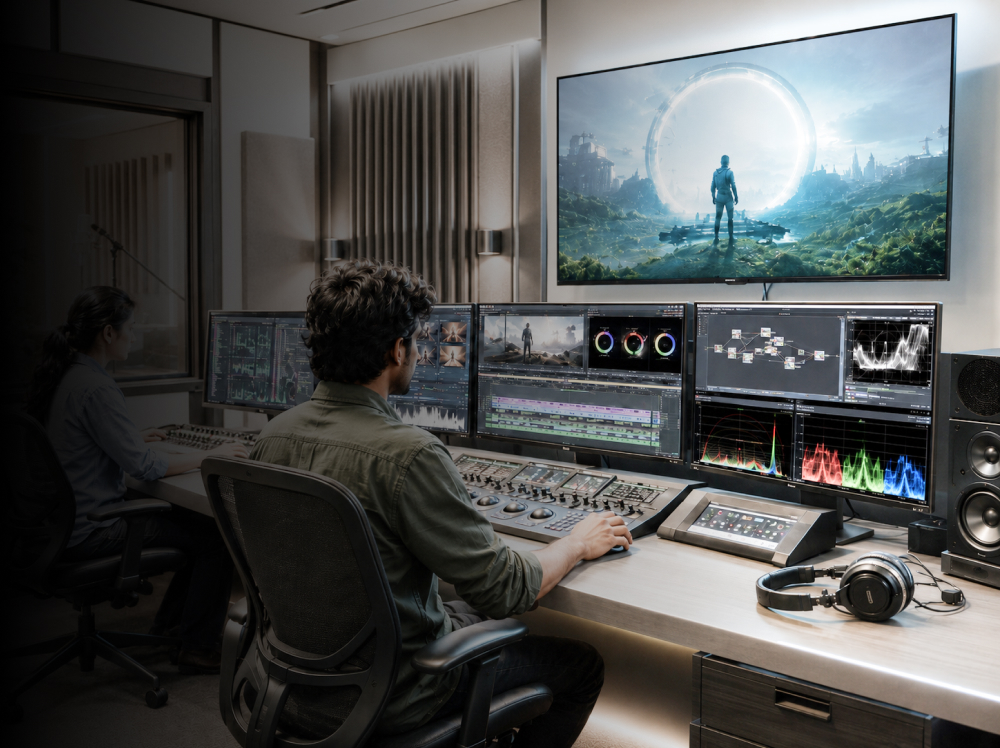
Color & DI: DI Assistant → Junior Colorist → Colorist
Best Entry Asset: Portfolio or Showreel
Most Structured Studio Hiring: VFX and facility-based roles
Most Location-Dependent Work: Final mixing and high-end color grading
Best First Step: Choose one craft and build demonstrable work
Post-production jobs fall into five distinct crafts that share a corridor. They demand different aptitudes, and choosing between them early saves years.
Two terminology points before going further, because job listings blur them constantly. Sound recording jobs happen on the floor during the shoot, while sound designing jobs happen in a studio afterwards; they are different careers under one department name. And colorist jobs and color grading jobs describe the same work, spelled both ways in Indian listings.
2. The Post-Production Timeline: What Happens After the Shoot
Post-production does not begin when the shoot ends. On most modern projects it overlaps principal photography and continues for months afterwards, which is why post-production jobs have a hiring window that never fully closes.
Stage
Timeline
Core Objective
Key Positions
Ingest & Assembly
During the shoot
Media management, synchronizing, dailies, rough assembly
Full resolution rebuilds, color grade, deliverables
Online Editor, DI Assistant, Colorist
Localization
After the mix
Dubbing, subtitling, multi-language delivery
Dubbing Director, Voice Artist, Subtitle QC
Two words are worth knowing before any editorial interview. Offline is the creative edit, cut at reduced resolution for speed. Online, or conform, is the process of rebuilding that locked edit at full resolution before it goes to the grade. Assistant editors do a great deal of conform work, and fluency in it is what gets people kept on.
3. Editing Jobs: From Assistant Editor to Film Editor
An editor decides what a film means. Not by assembling footage in sequence, but by choosing which performance the audience believes, how long they sit with it, and what they are never shown.
Of all post-production jobs, editing is the one whose scale in India is easiest to underestimate. A. Sreekar Prasad holds seven National Film Awards for Best Editing, the record in that category, and has cut films across seventeen languages (National Film Awards record, Best Editing). Editing is one of the few crafts in Indian cinema where a career can move freely between language industries, because the grammar of a cut does not need translation.
Editor jobs are almost always entered through the assistant editor role, and this is the most common route into post-production jobs of any kind. The work is ingested, synchronizing, bin structure, rushes, media continuity, project hygiene, and rough assembly performed by someone who made a real film. It is an apprenticeship dressed as a technical role, and it is why most working editors can name who they assisted.
Role
What They Do
Typical Route In
Assistant Editor
Ingest, sync, bins, conform, assembly
Direct application to post houses, or attaching to a working editor
Film Editor
Owns the cut, structure, and pacing
Years assisting, plus independent cut work
Offline Editor
The creative edit on ads and episodics
Often specialized to a medium
Online Editor / Conform Artist
Rebuilds the locked cut at full resolution
Promotion from assistant editor
Promo & Trailer Editor
Cuts marketing material
A separate and consistently busy specialism
Editor jobs in India are rarely built from features alone. Advertising, OTT episodics, promos, music videos and branded content carry the volume, and a working editor moves between them. Software matters less than beginners’ fear: Avid, Premiere Pro and DaVinci Resolve are all in active use, and facilities will tell you which one they run.
4. Sound Jobs: Recording, Design, Mixing and Dubbing
Sound splits into two careers that share a department name. Production sound happens on the floor, where the location recordist captures dialogue against a live and noisy world, and the boom operator places the mic. Post sound happens afterwards in a studio: dialogue editing, foley, sound design, and the final mix.
India’s sound department also produced an Academy Award. Resul Pookutty won Best Sound Mixing for Slumdog Millionaire, recognized by the Academy of Motion Picture Arts and Sciences, for work built substantially on the acoustic chaos of live Mumbai streets rather than in spite of it.
Then there is dubbing, and this is where India is structurally unlike anywhere else. India has a long history of post-synchronized dialogue and dubbing, and multilingual distribution has made voice and localization work an important part of the country’s screen industries.
At the domestic box office, the Hindi dubbed version of Baahubali 2: The Conclusion earned roughly ₹511 crore net in India, more than the film’s original Telugu release took in its home market, and it went on to become, at the time, the highest-grossing Hindi-language film in India, ahead of Dangal (TOI).
A dub is not a downstream afterthought in this market. It is frequently the version that carries the film.
Role
Where
What They Do
Location Sound Recordist
Set
Captures usable dialogue on a live location
Boom Operator
Set
Places the mic. The entry point on the floor
Dialogue Editor
Studio
Cleans, replaces, and matches dialogue
Foley Artist
Studio
Performs everyday sound to picture
Sound Designer
Studio
Builds the sonic world of the film
Re-recording Mixer
Mixing stage
Balances and finalizes the mix
Dubbing Director
Studio
Directs vocal performance in the target language
Voice / Dubbing Artist
Studio
Performs the role in another language
Dubbing jobs is not supplementary work. They support a full career in India across features, series, animation, advertising, audiobooks, e-learning, and gaming. There is no real Hollywood equivalent to that career shape. One constraint applies across the department: the final mix happens on a calibrated mixing stage, so while dialogue editing and design travel, the mix does not.
5. VFX Jobs: From Roto Artist to VFX Supervisor
VFX offers one of the more structured salaried career paths in Indian post-production. Studios employ artists on monthly payroll, run defined internal ladders, publish openings on careers portals, and recruit heavily on demonstrated work, usually through a showreel and, in many cases, a practical test. Applying for VFX jobs is the closest the industry gets to a normal job application, which is why so many people working in post-production started there.
That structure exists because a large share of Indian VFX work is service work for productions elsewhere, reinforced by the incentive scheme covering standalone post and VFX projects and by the National Centre of Excellence for AVGC-XR approved in 2024 (Press Information Bureau). When the client is a studio in London or Los Angeles, a VFX artist is judged on shots, not contacts, and VFX jobs are advertised accordingly.
Role
What They Do
Level
Roto & Paint Artist
Frame-by-frame isolation and cleanup
Entry
Matchmove Artist
Tracks real camera movement into 3D
Junior
Compositor
Combines elements into a finished shot
Core craft role
FX Artist / FX TD
Simulation: fire, water, smoke, destruction
Specialist, highest ceiling
Lighting & Lookdev Artist
Makes CG elements sit convincingly in the plate
Mid
Animator
Character and creature performance
Mid
VFX Supervisor
Owns the visual effects work across the whole film
Senior
The honest thing to say to any aspiring VFX artist is that rotoscopy is both the standard entry route and the task most affected by automated tools. That is a change in what the job involves rather than evidence the job is disappearing, and the artists least exposed to it treat roto as a first station rather than a destination. Matchmove and compositing are the natural next steps, and both reward the same discipline.
6. Color Jobs: From DI Assistant to Colorist
Colorist jobs sit at the end of the post-production chain. A colorist sets the final look of every frame, working with the director and DOP after the cut is locked. Two corrections are worth carrying into any interview, because getting them wrong signals inexperience immediately.
DI refers to the digital intermediate workflow, the finishing process that includes conform, color grading, and related deliverables. DI Assistant is the job title; DI is not the job itself
Color is a parallel career to editing, not a promotion from it. An assistant editor who wants to grade moves sideways into a DI assistant role and starts again on a separate craft ladder.
Role
What They Do
DI Assistant
Conform, media management, versioning, deliverables
Junior Colorist
Grades ads, promos, and episodic content
Colorist
Sets the final look with the DOP and director
DI Producer
Runs the finishing schedule and the client relationship
Color grading jobs are the least location-flexible in post. Grading requires a calibrated suite with controlled lighting, which is why colorists cluster around facilities in Mumbai, Hyderabad, and Chennai rather than working remotely.
7. The Financial Reality: How Post-Production Work Is Paid
Published salary averages for post-production jobs are unreliable in India. Salary aggregator websites blend feature and OTT post work with corporate video, wedding editing, and event coverage, which produces averages that describe neither market accurately. The structure is more reliable with guidance than any single figure.
Compensation Type
Where It Applies
Monthly salary
VFX artists, animators, studio post staff, DI facility staff, dubbing studio staff, OTT platform post teams
Project fee
Film editors, sound designers, colorists, dubbing directors engaged independently
Day rate
Location sound recordists, boom operators, freelance assistant editors on shoot-adjacent work
Per-hour or per-loop
Voice and dubbing artists, depending on studio and language
Three patterns hold across the department. Post-production contains more salaried positions than any other part of the film industry, which makes it the realistic option for anyone who needs predictable monthly income while working in film. The medium moves rates more than the role does, with advertising typically at the top per day, then OTT, then features. And specialization multiplies earnings faster than seniority alone, particularly in scarce technical disciplines such as FX simulation.
Published pay data for Indian post-production is thin and largely self-reported, including figures published confidently by training institutes with courses to sell. The most reliable guidance comes from people in your own craft, your own city and your own medium.
8. How Post Houses and Studios Actually Hire
Post-production jobs are filled on demonstrated work, and each craft has a distinct version of what that means.
VFX: A showreel with a shot breakdown. Studios need to know exactly which element of each shot was yours, and a reel without a breakdown gets closed. Many studios also set a practical test, usually a roto or composite exercise against a deadline.
Editing: A cut, not a montage. Editors are hired on a scene that holds tension, contains performance, and demonstrates judgment about what to leave out. Assistant editor roles are frequently won on organization, so a clean project structure is worth showing.
Sound and dubbing: Recorded work, and for voice artists a demo covering range rather than a single register. Dubbing studios cast from auditions and maintain artist files by language and voice type.
Color: Colorist jobs are won on before and after stills or clips from real footage, ideally footage you did not shoot. Grading someone else’s material is what the job actually is.
Referral still operates alongside all of this, particularly for editors attached to a director and for sound designers who become part of a filmmaker’s regular team. The difference from on-set hiring is that in post the formal route genuinely works in parallel.
9. Where the Work Is, and What Travels
Hub
Post-Production Strength
Mumbai
The largest concentration of post houses, VFX studios, dubbing studios and mixing stages
Hyderabad
Major VFX base, large-format Telugu features, Ramoji Film City
Chennai
Long-established technical and finishing base for Tamil cinema
Bengaluru
VFX, animation and games studios
Kochi & Thiruvananthapuram
Malayalam post work and a growing facility base
Pune
FTII, and post work built around it
Noida & Delhi NCR
Corporate, branded, news and expanding facility infrastructure
Not all post-production jobs are tied to a facility. Editing and compositing travel well, and a meaningful share of both is now done remotely. High-end color grading and final mixing often remain tied to calibrated suites or professional mixing environments, although remote workflows are increasingly possible for some projects. Anyone planning a colorist career around working from a bedroom should reconsider the plan rather than the craft.
10. Where to Find Post-Production Jobs in India
Salaried studio roles are advertised publicly. Facility and freelance work circulate informally and is often filled before it is written down. Work two or three of these channels at once rather than refreshing one job board.
Channel
Best for
How to use it
Studio career pages
VFX artists, animators, lighting, and pipeline roles
Apply cold with a showreel and shot breakdown. Check pages directly, not aggregators
Post houses
Assistant editors, online editors, DI assistants
Rarely advertised. Email the post supervisor with a reel and your city
VFX companies
First-time VFX artists with no credits
The highest volume of real entry-level openings. Expect a timed test. Treat it as the interview
Dubbing and localization studios
Voice talent, language specialists, dubbing jobs
Submit a demo covering range. Being on file by language and voice type is the goal
OTT production and post teams
Anyone wanting salary and structure
Hires like a normal company. The least referral-dependent route in the industry
Professional networks
All crafts, especially freelancers
Put craft, software, and city in your headline. Indian freelance post work still moves through WhatsApp and Facebook craft groups
Film-school networks
FTII, SRFTI, Whistling Woods and regional graduates
The long game. Your cohort becomes the people hiring in ten years
Artisty
Anyone whose work is scattered across Drive links and old reels
One profile carrying craft, credits, reel, software, and city, discoverable by studios
Studio pages and OTT teams hire strangers on the strength of a reel, so they reward persistence. Post houses and dubbing studios run direct contact, so they reward one well-timed email over a mass application.
11. How to Get Your First Post-Production Credit
Pick one craft. Post-production jobs divide into editing, sound, VFX, and color. Pick one, not “post.” Every subsequent decision becomes easier.
Learn the entry role tools, not the whole department. Roto in Nuke or Silhouette for VFX. One NLE for editing. DaVinci Resolve, which is free, for color.
Make work on real footage. Cut a student film. Grade footage you did not shoot. Roto a plate. Sound designs a scene with its audio stripped. None of these require permission.
Build a reel with a breakdown. Ninety seconds, strongest work first, one clear line per item stating what you did.
Apply directly. VFX studios, post houses and dubbing studios list openings and accept cold applications. This is part of the film industry where that works.
Take the assistant role and be reliable. Assistant editor, DI assistant, roto artist, studio runner. Post rooms are small and reliability is remembered for years.
Be findable. Craft, credits, reel, software, city, and availability in one place.
Formal training is an option rather than a requirement. FTII Pune, SRFTI Kolkata and Whistling Woods International offer editing and sound programs with equipment access and a peer cohort who will hire each other for the next twenty years. Neither route excludes the other, and the on-set path is covered in our guide to film industry jobs.
12. Emerging Frontiers in 2026
Four shifts are reshaping post-production jobs this year.
Localization at scale. Every additional language a title ships in generates dubbing, subtitling and QC work. OTT and short-form vertical drama have made multi-language release routine rather than exceptional.
Episodic post pipelines. Series require longer and more organized post schedules than features, turning parts of post-production into ongoing employment rather than project bursts.
Virtual production and real-time pipelines. LED volume work has moved parts of the traditional VFX process into pre-production and onto the set, creating hybrid roles for artists comfortable in game engines.
Assistive and generative tooling. Roto, cleanup, dialogue repair, subtitling, and previsualization are seeing real workflow changes. The professionals adapting best are the ones who can demonstrate output rather than list software.
Getting Found for the Work You Can Do
Post-production jobs in India come with an unusual problem. The hiring is genuinely open and portfolio-led, and yet a great deal of strong work sits unseen in Drive folders and old showreels that were never sent to anyone.
Artisty exists to close that gap. Instead of scattered PDFs and broken video links, you build one structured profile carrying your craft, credits, showreel, software and city availability. KalaAi reads professional work histories and evaluates technical proficiency, so productions and studios can discover talent on demonstrated capability rather than self-reported skills.
Post-production jobs are the roles that finish a film after the shoot: editing, sound design and mixing, dubbing and voice work, visual effects, and color grading. They are based in post houses, VFX studios, DI facilities, and dubbing studios rather than on set, and a sizable proportion are salaried rather than project booked.
How do I get into post-production with no experience?
Choose one craft, learn the tools its entry role requires, and build portfolio work on real footage: cut a student film, grade footage you did not shoot, or roto a plate. Then apply directly to VFX studios, post houses, and dubbing studios, which often accept direct applications and use portfolios, showreels and practical tests as important parts of the assessment.
Is VFX a good career in India?
VFX offers one of the most structured career paths in Indian film. Studios employ artists on payroll with defined progression from roto and match move through compositing to supervision, and a large share of Indian studio output serves international productions. Entry is portfolio-led, and a showreel with a shot breakdown carries more weight than a degree.
What is the difference between an editor and a colorist?
An editor determines the structure, pace, and performance of a film. A colorist sets the final look of every frame after picture lock, working inside the digital intermediate stage with the DOP and director. They are parallel careers on separate ladders, and moving from editing into color means restarting as a DI assistant.
Can post-production work be done remotely in India?
Editing and compositing travel well, and a significant share of both is now performed remotely. Color grading requires a calibrated suite with controlled lighting, and the final mix requires a mixing stage, so both remain tied to a facility. Dubbing is recorded in a studio, though not necessarily in the same city as production.
What are sound recording jobs versus sound design jobs?
Sound recording jobs happen during the shoot, capturing live dialogue on location through the sound recorder and boom operator. Sound designing jobs happen afterwards in a studio, building atmospheres, effects, and the sonic world of the film. They sit in the same department but are separate career tracks with different tools and working environments.
Are dubbing jobs a viable full-time career in India?
Yes. India’s dubbing and localization sector supports full-time careers across features, OTT series, animation, advertising, audiobooks, e-learning, and gaming, driven by multi-language release becoming standard. Roles include voice artist, dubbing director, adaptation writer and localization QC, and demand spans more than a dozen Indian languages plus international pairs.
What qualifications do you need for colorist jobs?
No formal qualification is required. Color grading jobs are filled on demonstrated grades, usually shown as before and after clips from footage, the applicant did not shoot. Most colorists enter through a DI assistant role at a facility; learning conforms, deliverables and client workflow before touching a grade on paying work.
Which pays more, editor jobs or VFX jobs?
They are paid on different structures rather than on different scales. VFX artists are typically salaried with defined bands and clear progression, while editors are more often engaged on project fees that vary sharply by medium. Advertising work pays the most per day across both crafts, and senior specialists can earn more than the averages suggest.
How do I find post-production jobs in India?
VFX studios, animation studios and larger post houses publish openings on their own career pages and on professional networks and accept direct applications. Smaller facilities and independent editors, sound designers and colorists are engaged through referrals and reputation. Building a structured, discoverable profile covering your craft, credits, reel, and city availability is what makes both routes work.